Cel Animation
Clear sheets, painted backs, one frame each. For most of the 20th century cartoons were painted on clear sheets called cels. How cels worked, who invented them and why studios went digital.
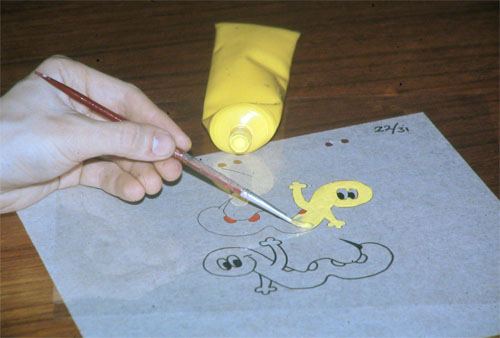
Painting a cel by hand: Janke | Talk, CC BY-SA 3.0
The problem cels solved
Early animators like Winsor McCay drew every frame complete, background and all. That meant drawing the same trees and houses thousands of times. In 1914 Earl Hurd and John Bray patented a better way: draw the moving character on a clear sheet and lay it over a single painted background.
These sheets became known as cels, short for celluloid. The first ones were made of cellulose nitrate, which was flammable, and studios later switched to the more stable cellulose acetate. The patent earned Bray and Hurd licensing fees until it entered the public domain in 1932.
Ink and paint
Making a cel was a craft of its own. Animators drew in pencil on paper. Then inkers traced each line onto the front of a cel, and painters filled in colours on the back with gouache or acrylic paint, so the brush strokes stayed hidden and the ink lines stayed crisp. A single short could need thousands of cels.
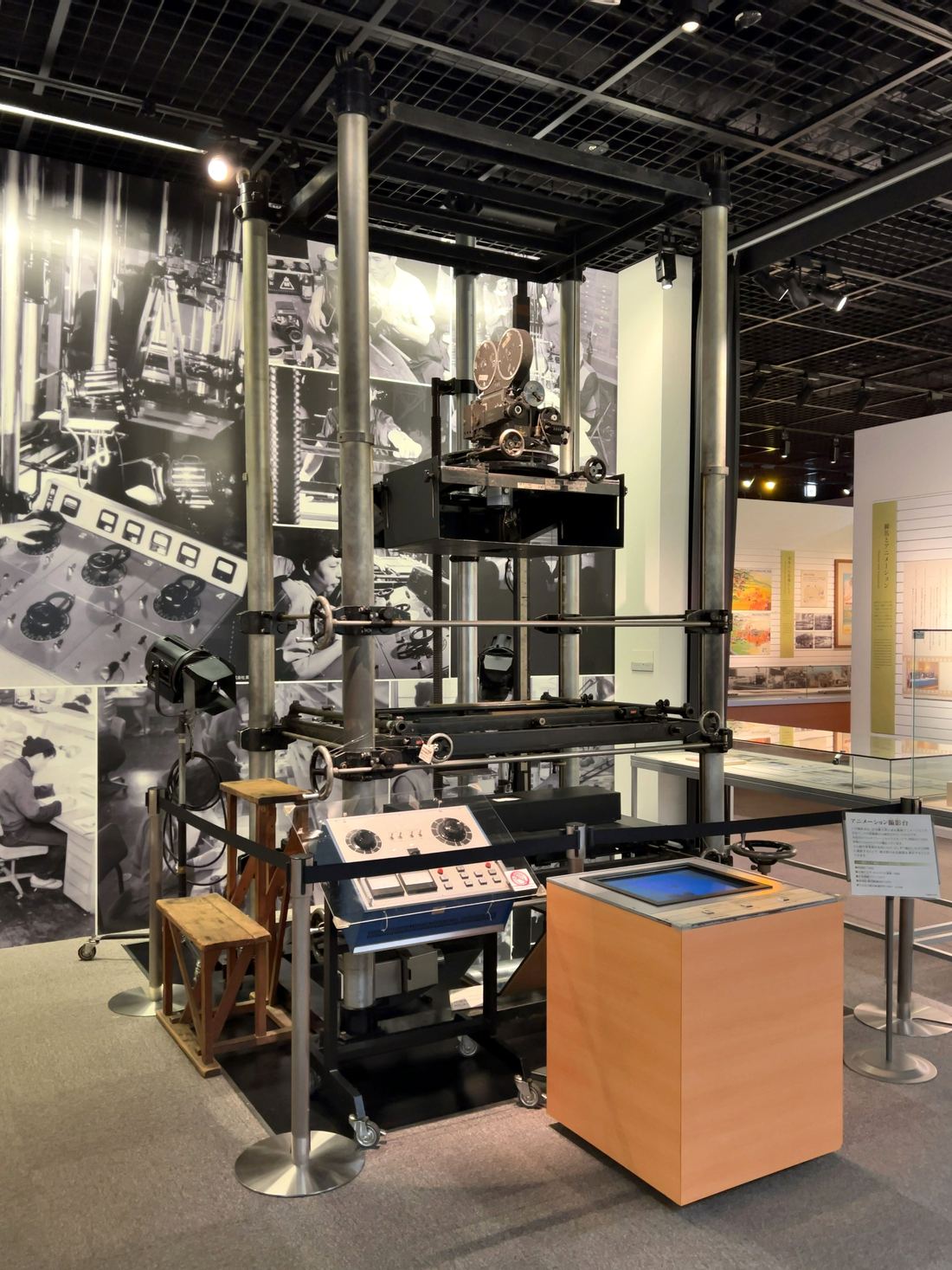
Several cels could be stacked, one for each moving character, over the background. The stack was placed under a camera on an animation stand, photographed, then changed for the next frame.
Adding depth
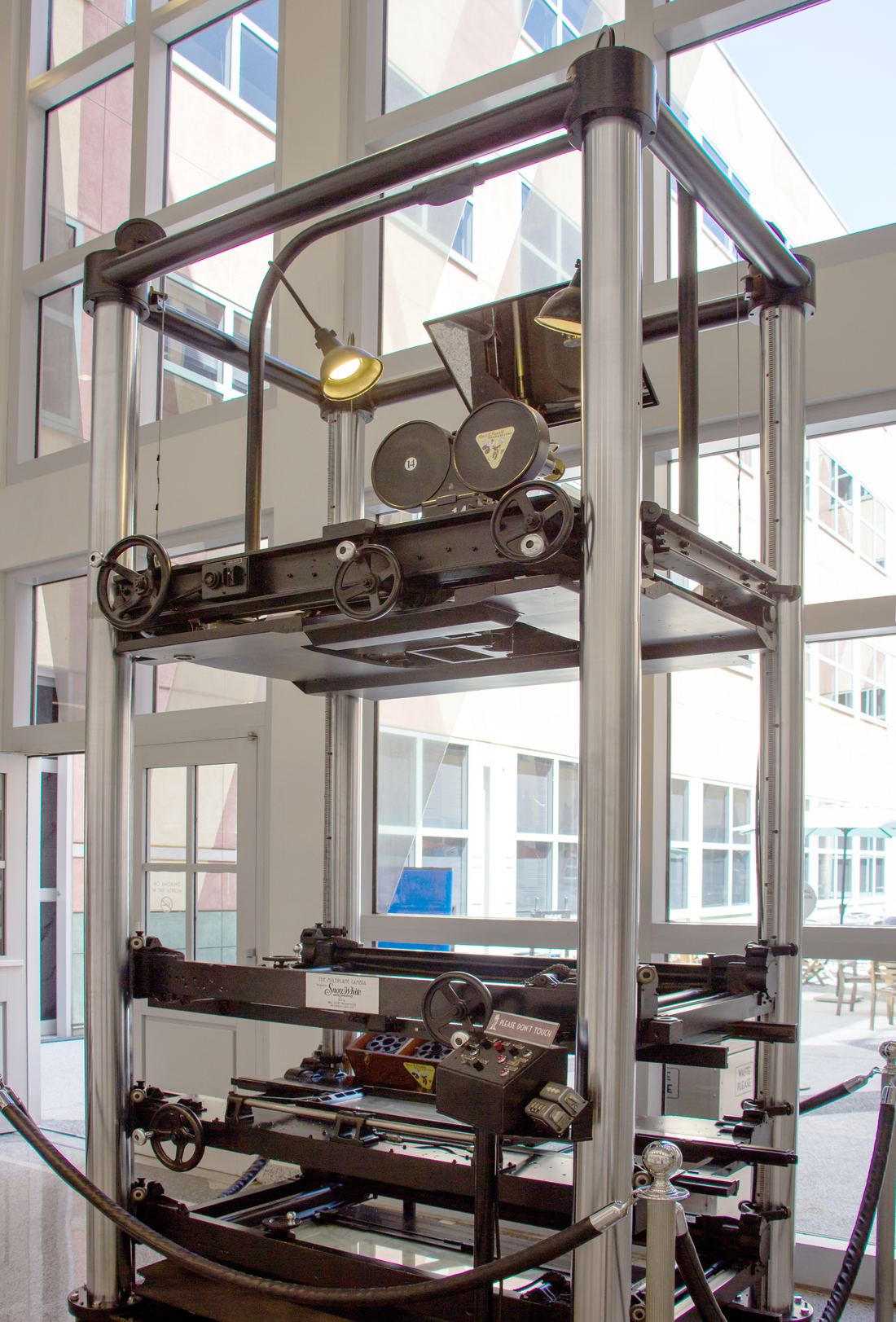
Flat layers can look flat. Studios built cameras that spaced artwork out on separate glass planes, so foreground, middle and background could move at different speeds. Lotte Reiniger used an early version for her 1926 feature The Adventures of Prince Achmed, Ub Iwerks built one in 1933, and Disney's 1937 multiplane camera could hold up to seven layers.
In the late 1950s Ub Iwerks adapted xerography, a photocopy process, so drawings could be copied straight onto cels without hand inking. The first feature made entirely this way was One Hundred and One Dalmatians in 1961, which gave it a sketchy, energetic line.
The digital switch
From 1989 Disney began colouring drawings on computers with a system called CAPS, developed with Pixar. The Rescuers Down Under in 1990 was the first major feature to use digital ink and paint for the whole film. Other studios followed, and by the 2000s painted cels had almost disappeared from big productions.
Original production cels are now prized by collectors, and a few artists still paint them by hand for the look and feel of the old process.
Reading a vintage cel
If you ever see an original cel at a museum or auction, turn your attention to the edges. Many cels have peg holes along one side, which lined them up exactly with the drawings and background on the animation stand. Some carry scene and frame numbers written in the corner.
Look at the paint from the back and you will see thick, flat layers of colour. Old cels can crack, peel or yellow over time, so collectors keep them away from heat and sunlight.
- Painting a cel by hand: Janke | Talk, CC BY-SA 3.0
- A 1937 multiplane camera: HarshLight from San Jose, CA, USA, CC BY 2.0
- An animation filming stand: Asanagi, CC0
Text written by Fantastic Cartoon.